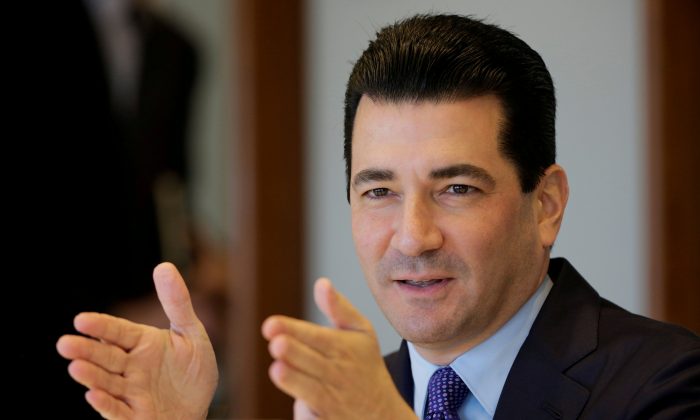
An email released on January 9th has revealed that a Pfizer board member, who is also a former head of the U.S. Food and Drug Administration (FDA), lobbied Twitter to take action against a post that highlighted the superiority of natural immunity to COVID-19 vaccination. The board member, Dr. Scott Gottlieb, contacted a Twitter executive to request action against a post by another former FDA commissioner, Dr. Brett Giroir.
In his email, Gottlieb criticized Giroir's post, stating that it drew sweeping conclusions from a single retrospective study in Israel that had not yet undergone peer review. Giroir had argued that natural immunity was superior to vaccine-induced immunity, citing a preprint study from Israeli researchers that found natural immunity provided better protection against the Delta variant of SARS-CoV-2.
The study, which was later published in the journal Clinical Infectious Diseases after peer review, concluded that natural immunity conferred longer-lasting and stronger protection against infection, symptomatic disease, and hospitalization compared to the Pfizer vaccine. However, Twitter placed a tag on Giroir's post, claiming it was “misleading” and directing users to information on why health officials recommend vaccination.
Gottlieb's email triggered messages within Twitter's internal messaging system, but the post did not violate any misinformation rules. Despite this, Twitter still placed a tag on the post, restricting interactions such as replies, shares, and likes. Gottlieb later defended his actions, stating that he targeted posts with “false and inflammatory” information.
This incident was not the only one involving Gottlieb and Twitter. He also flagged a post from Justin Hart, a critic of lockdowns and COVID-19 vaccines. While the reason behind Gottlieb's objection was not disclosed, it occurred shortly before Pfizer's vaccine was authorized for children aged 5 to 11. However, Twitter did not take any action in response to Gottlieb's request.
Furthermore, it was revealed that Gottlieb tried to get journalist Alex Berenson banned from Twitter. He forwarded a blog post from Berenson to a Twitter worker, claiming that Berenson's criticism of Dr. Anthony Fauci was an example of why Fauci needed a security detail. Four days later, Twitter permanently suspended Berenson for alleged violations of its COVID-19 misinformation rules. Gottlieb defended his actions, expressing concerns about threats made on social media platforms.
Berenson subsequently filed a lawsuit against Twitter and was reinstated on the platform as part of a settlement agreement. The release of Gottlieb's email about Fauci's post occurred during the discovery process of the lawsuit. Prior to the settlement, a judge had concluded that Berenson had plausible allegations that Twitter did not follow its policy of providing five strikes before banning a user.
This series of events raises concerns about the influence of pharmaceutical companies and individuals associated with them on social media platforms. It highlights the need for transparency and unbiased information dissemination to allow for open discussions regarding COVID-19, including the effectiveness of vaccines and natural immunity.
In conclusion, the email released on January 9th reveals that a Pfizer board member and former FDA head, Dr. Scott Gottlieb, lobbied Twitter to take action against posts discussing the superiority of natural immunity over COVID-19 vaccination. This incident, along with Gottlieb's attempt to get a journalist banned from Twitter, raises questions about the influence of pharmaceutical companies and the need for unbiased information dissemination on social media platforms.